The Ark of the Covenant
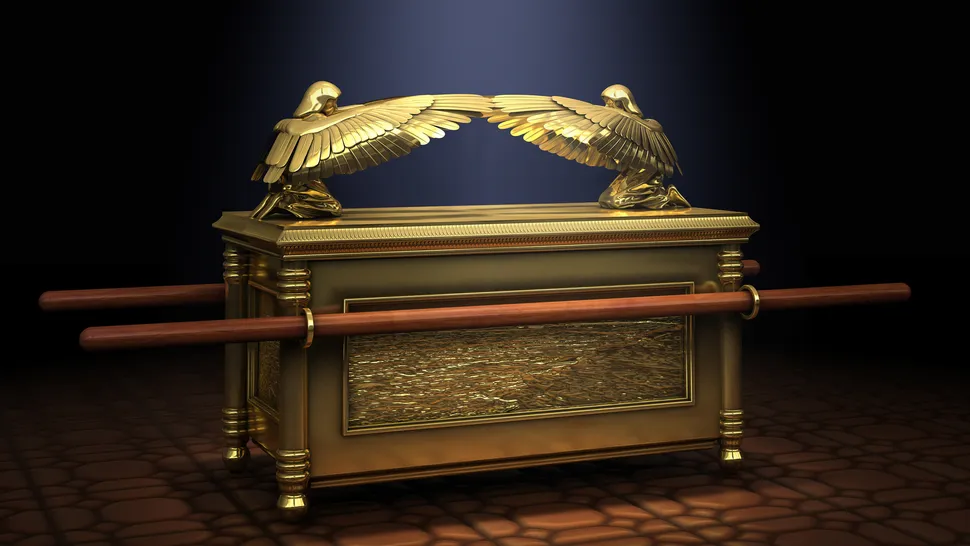
The Ark of the Covenant, which held the Ten Commandments, disappeared after the Babylonian destruction of Jerusalem’s Temple in 586 B.C.E. While many speculate it was destroyed, stolen, or hidden, its exact fate remains an enduring, unverified mystery.
What happened to the Ark of the Covenant? Here’s what we know.
In A.D. 70, after a brutal, months-long siege, Roman troops under General Titus stormed Jerusalem to crush a Jewish revolt against imperial rule. The city fell, and the Second Temple—the spiritual heart of Judaism—was plundered and burned. Roman soldiers seized its sacred treasures. However, one crucial artifact was noticeably missing: The Ark of the Covenant. Jewish historian Flavius Josephus, an eyewitness to the events, wrote an account a few years later in The Jewish War, detailing the temple’s destruction and the triumphal parade in Rome that followed:
“The golden table, of the weight of many talents; the candlestick also, that was made of gold… and the last of all the spoils, was carried the Law of the Jews.’’ Amongst all the treasures, there is no mention of the ark, in which the Tablets of the Law should have been housed. The ark hadn’t been destroyed in the siege. It had vanished centuries earlier.
Origins of the ark
The story of the ark is difficult to pin down, mainly because sources provide differing accounts. Some scholars have raised the possibility that more than one ark may have existed—perhaps built at different times, or even used simultaneously—leaving open the question of which, if any, was the original. The Tanakh (Hebrew Bible) describes the ark’s origins at length. After the Israelites fled Egypt during the Exodus in the 13th century B.C., they made camp at Sinai, described as a wild region located outside of Egypt. They stayed there for two years, receiving divine law and guidance for their future as a nation. Yahweh (God) gave Moses the Tablets of the Law, on which he had inscribed his ten commandments. Yahweh ordered Moses to keep them in a chest made of wood and gold, with five main features. The chest was to be made of acacia wood, 2.5 x 1.5 x 1.5 cubits (3.75 x 2.25 x 2.25 feet) in size, with gold overlay inside and out.
Four rings were to be attached to the bottom of each corner, through which carrying poles made out of acacia wood would be inserted, also in gold overlay. Finally, the Israelites were to place inside it the tablets of the law, a pot of manna, and the rod of Moses’ brother Aaron, which is said to have had miraculous powers.
The ark’s whereabouts
The Book of Chronicles refers to the ark’s likely presence in the Temple in the time of King Josiah of Judah, who lived in the second half of the seventh century B.C.: “He said to the Levites, who instructed all Israel and who had been consecrated to the Lord: ‘Put the sacred ark in the temple that Solomon son of David king of Israel built. It is not to be carried about on your shoulders.’”(2 Chronicles 35:3).The passage does not clarify the ark’s location before the order was given to restore it to the Temple.
Non-biblical sources state that when King Nebuchadnezzar II of Babylon conquered Jerusalem and destroyed the Temple in 586 B.C. there is no mention of him finding the ark. The sacred chest was likewise missing from accounts of Titus’s destruction of the Temple six centuries later. The Bible does not make explicit when, or how, the ark disappeared from the temple. Based on biblical and other accounts, some scholars argue the disappearance took place sometime between the time of Josiah in the late 600s B.C. , and 586 B.C., when the Babylonians captured Jerusalem.
Various explanations emerged regarding the fate that might have befallen the sacred object. Several non-biblical, religious writings account for the fate of the ark. The Talmud, the foundational body of Jewish civil and religious law compiled between the third and sixth centuries A.D., recounts that some years before the Babylonian destruction of the First Temple in 586 B.C., King Josiah foresaw the threat and hid the ark. According to this version, it was buried, along with other sacred artifacts, in a chamber beneath the Temple that Solomon had prepared centuries earlier for such a purpose.